

www.bbc.com
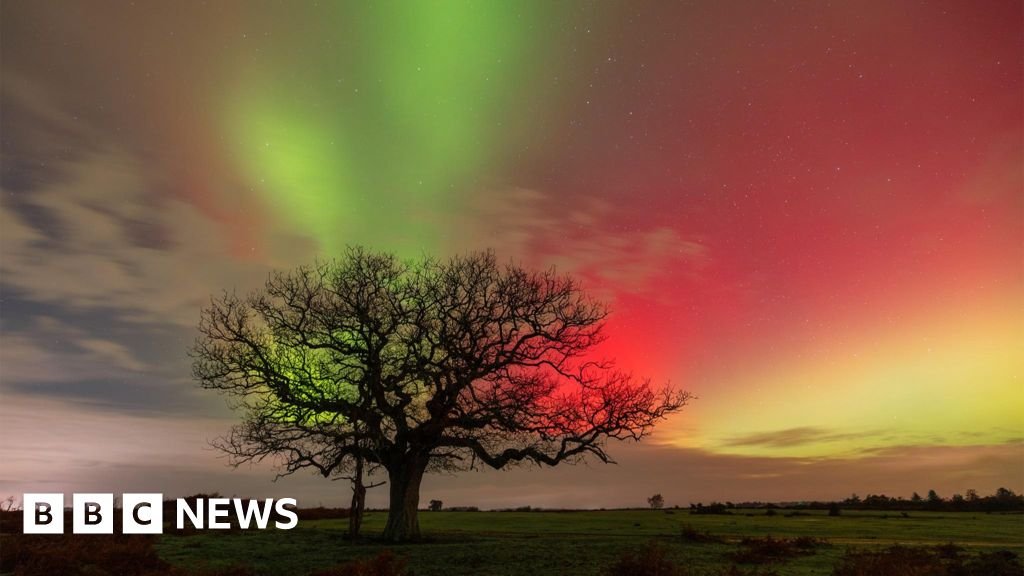
Aurora Borealis is an atmospheric phenomenon caused by solar eruptions, specifically Coronal Mass Ejections (CMEs) and solar wind. These events release high-energy charged particles that travel toward Earth. Upon reaching our planet, these particles collide with gases in the atmosphere—primarily oxygen and nitrogen—exciting their atoms. As these atoms return to their normal energy states, they release photons of light, creating the characteristic shimmering curtains of green, red, and purple seen in the night sky. This interaction typically occurs in the polar regions, within the “auroral ovale,” where Earth’s magnetosphere channels the particles toward the atmosphere. The specific colors displayed depend on the type of gas involved and the altitude of the collision; for instance, collisions with oxygen at higher altitudes produce rare red lights, while nitrogen interactions often yield blues and purples.
Read More
